Dynamics AX
  RSS Feed  LinkedIn  Twitter
Want to turn you're data into a true asset? Ready to break free from the report factory?
Ready to gain true insights that are action focused for truly data informed decisions?
Want to do all of this across mutliple companies, instances of Dynamics and your other investments?
Hillstar Business Intelligence is the answer then! (www.HillstarBI.com)

Hillstar Business Intelligence for Microsoft Dynamics AX and NAV on Mobile, Desktop, Tablet


Let us prove to you how we can take the complexity out of the schema and truly enable users to answer the needed questions to run your business! Visit Hillstar Business Solutions at: www.HillstarBI.com

Tuesday, March 20, 2012

MSDW: Microsoft Dynamics AX 2012 R2 Boasts Closer Ties to SQL Server Release


I wanted to circle back around on an article MSDynamicsWorld.com posted. That is: Microsoft Dynamics AX 2012 R2 Boasts Closer Ties to SQL Server Release, GM Says.

From the article:
"If you are curious how Microsoft Dynamics AX is improving integration to Microsoft SQL Server 2012, the AX team wants you to know that the AX is a prime customer of SQL Server internally at Microsoft, and many of the key improvements that Dynamics AX aims to deliver in the upcoming 2012 R2 release, from support of data warehousing initiatives to master data management to the building reports and KPIs in the AX 2012 interface to load testing of SQL Azure are all dependent on the AX and SQL Server teams work together."

This is a topic I have been personally covering and will continue to expand on, from the following.:


The area of BI for AX 2012 is one that as I've point out in the past can bring great value to new & existing Microsoft Dynamics AX customers. What's critical is understanding the right tools for the job and how those are correctly implemented and used with AX.

Going back to the article from MSDW, something that I have not covered much yet, but directly will impact and help further expand the capability of AX in creating a BI story for companies is around analytical MDM.

From the article:
"According to Pedersen, AX 2012 R2 will expand analytical MDM capabiltiies, but operational MDM will not be a focus area. R2 will mostly see improvements again as it relates to the improvements in SQL Server 2012. "The most effective analytics are the ones that consider all the elements, not just those constrained to the AX data," says Pedersen. He expects customers to look for ways to roll together data from other systems through SQL Server Reporting Service, including, potentially from big data sources served through the Azure data market to conduct deeper analytics."

These are all great moves, and should excite any AX customer no matter what version your on. You can see that Microsoft is providing the right framework, to enable a true BI Story for AX Customers.

Well that's all I have time for right now, but check back soon as we have a lot more to cover and talk about. Till Next Time!

Follow Me @:
RSS Feed  LinkedIn  Twitter

"Visit the Dynamics AX Community Page today!"

Labels: , , , , , , , , ,

Friday, March 02, 2012

Understanding Business Intelligence Semantic Model (BISM) & Future with AX 2012


Visit Hillstar Business Intelligence (www.HillstarBI.com) in order to truly unlock your data trapped in your Microsoft Dynamics investment. With our value driven business intelligence strategy Hillstar help you transform into a data informed company.


I hope everyone is doing well on this fine Friday! Hopefully you have had a very productive week, focused on your Dynamics AX projects. I wanted to continue today, the forward looking exercise of diving into the future of Business Intelligence and it's use with AX. We started the look, with an early post, focused around SQL Server 2012 & the Future of BI with Dynamics AX.


That was an introduction really, and resource post on getting access to SQL Server 2012 RC0, as well as focused on the new reality of Personal BI also known as Self-Service BI. From there, the next post was an high level introduction SQL Server 2012 - SSAS Tabular Modeling.
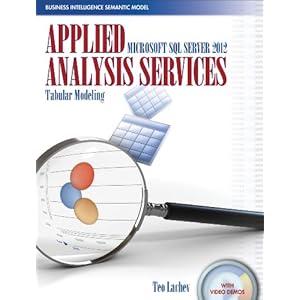


This included an introduction to a recently released book, pictured above, that helps dive into the topics of BI, empowered by SQL Server 2012. Now have these introduction post, it's time to take a step back a bit, and look at the larger picture, and vision of BI. Enter Business Intelligence Semantic Model (BISM).


Image Courtesy of Microsoft


From the above image, we can see that BI is taking shape in three real domains of context, and therefore development. First we have the Personal BI, followed by Team BI & finally Operational BI. A key understanding from this point, at least from the vision point of view, is Microsoft's focus on 'One Model for all End User Experiences'.

This was a driving theme behind Microsoft's adoption of technologies like VertiPaq that are enabling the Tabular Modeling concepts. As well, this still very much includes, vs. excludes, traditional BI concepts like OLAP Cubes.

If we look at this starting from the personal BI, we see technologies, that are very much apart of Microsoft Dynamics AX 2012 total solution. Starting with Personal BI and it's heavy use of Microsoft PowerPivot, through SharePoint and finally Analysis Services.


Image Courtesy of Microsoft


Moving forward, into the architecture of what will make up the BI Semantic Model, we see again, familiar and current use technologies that enable this reality. technologies, like SQL Server, Cloud based Data Services as we as OData Feeds.


We can see, already, that technologies like Microsoft PowerPivot can be used with enabling technologies like the Open Data Protocol or OData Feeds, can be used, correctly with AX 2012, to consume Query objects, for example, which enable this Personal BI, today. Having the above understanding of the BI Semantic Model, mixed with this understanding and we can see again how SQL Server 2012 will be used, and enable it's reality natively with Microsoft Dynamics AX 2012 RC2, scheduled for release in 2013.

To help better understand this vision & Microsoft roadmap, a great article was authored last May, that goes deeper into these topics.: Analysis Services – Vision & Roadmap Update

From the article:
"The BI Semantic Model is one model for all end user experiences – reporting, analytics, scorecards, dashboards, and custom applications. All client tools in the Microsoft BI stack – Excel, PowerPivot, SharePoint Insights and Reporting Services (including Crescent) – operate on this model. BI professionals can create the model in Visual Studio and deploy it to an Analysis Services server. Interestingly, the model can also be created by business users with PowerPivot for Excel and shared via PowerPivot for SharePoint. PowerPivot and Analysis Services are two different products; one targets business users and the other targets BI professionals and IT. However both use the BI Semantic Model under the covers."


Image Courtesy of SQLServerPerformance


Taking this understanding around the vision further, and going back to a focus around technical understanding, there is another great article, created by the SQLServerPerformance Site.: Getting Started with Business Intelligence Semantic Model (BISM) in SQL Server 2012

From the post:
"The Business Intelligence Semantic Model is one of the most significant enhancements in SQL Server 2012. BISM allows aspects of the traditional multidimensional model to coexist with the relational model in a format called the tabular model and can be used with all client tools in the Microsoft BI stack."

As you can see, the landscape of BI, offered from Microsoft, natively within the stack and products is getting a massive overhaul, and going to truly enable the 'BI for the Masses' tag line that has been a goal for many years now for Microsoft. These new offerings, are going to be natively used and very much a part of Microsoft Dynamics AX 2012 RC2. This will have a lasting impact, positive one in my thoughts, for how we even define Business Intelligence within the Dynamics Community.

That's all for this Friday, I hope that these post so far has your wheels turning, and your thinking hard about how this can benefit you and your companies Dynamics AX investment. Value is the focus, reducing time-to-value is the art, and for BI what we are seeing with SQL Server 2012's release brings the tools. Till Next Time!


Visit Hillstar Business Intelligence (www.HillstarBI.com) in order to truly unlock your data trapped in your Microsoft Dynamics investment. With our value driven business intelligence strategy Hillstar help you transform into a data informed company.


Follow Me @:
RSS Feed  LinkedIn  Twitter

"Visit the Dynamics AX Community Page today!"

Labels: , , , , , , , , , , , , ,

Wednesday, February 29, 2012

SQL Server 2012 - SSAS Tabular Modeling


In my last post about SQL Server 2012 & the Future of BI with Dynamics AX, I mentioned that we would start with the introduction of concepts and continue to dive deeper. With that in mind, lets dive a little further into Tabular Modeling with SQL Server 2012 - SQL Server Analysis Services.


I have referenced several times, the above image, and what it shows is the current AX 2012 Analysis Services Architecture and how OLAP Cubes are consumed and made use of within an AX instance.

It's very important to understand how the out-of-the-box AX 2012 OLAP Cubes are created, and consumed, to help understand how the new offerings coming with SQL Server 2012 might be enabled by Microsoft. Keep in mind the current target for the use of SQL Server 2012 with Dynamics AX is 2013 with the release of Microsoft Dynamics AX 2012 RC2.

The purpose of the following post, was to point out how BI Analytics for AX 2012 currently works and can be used: AX 2012 - Diving into BI Analytics


With this understanding, we can move forward with looking at what's going to be new for SQL Server 2012, specifically relating to Analysis Services - Tabular Modeling. To help us understand these concepts a little better, we have a few resources already out there. First off, lets get connected to the Microsoft Published resources for this topic.

The current resource we have from Microsoft, which we can use with the download of SQL Server 2012 RC0, is the following: Tabular Modeling (Adventure Works Tutorial).

From the Tutorial:
"To better support the data analysis needs of sales and marketing teams and of senior management, you are tasked with creating a tabular model for users to analyze internet sales data in the AdventureWorksDWDenali sample database."

Taking this, there are a good bit of key concepts that you can start to understand for the use of Tabular Modeling, with a realistic scenario. The big picture parts that should have special attention applied during this exercise is around the parts that make up a Tabular Modeling Project.

Applying this understanding of SQL Server 2012 Tabular Modeling Projects, along with how OLAP Cubes are created and consumed in AX 2012 today, we can piece together how Microsoft might take advantage of this technology with Microsoft Dynamics AX 2012 RC2. Further we also can get a glimpse into PowerPivotV2 which plays a critical part in the consumption of Tabular Models from SQL Server 2012.

Finally, I will point out on this topic a book that was recommend to me, and one that I personally ordered yesterday: Applied Microsoft SQL Server 2012 Analysis Services: Tabular Modeling


The Author of this book, Teo Lachev, by far, has the most exposure and expertise on this topic right now that I can find. I expect this book to get high ratings for myself personally once I'm done with it.

Well that's all for this post, but continue to check back as we look into the future of BI with Dynamics AX, along with many, many other topics. Till Next Time!

Follow Me @:
RSS Feed  LinkedIn  Twitter

"Visit the Dynamics AX Community Page today!"

Labels: , , , , , , , , , , ,


Copyright 2005-2011, J. Brandon George - All rights Reserved